
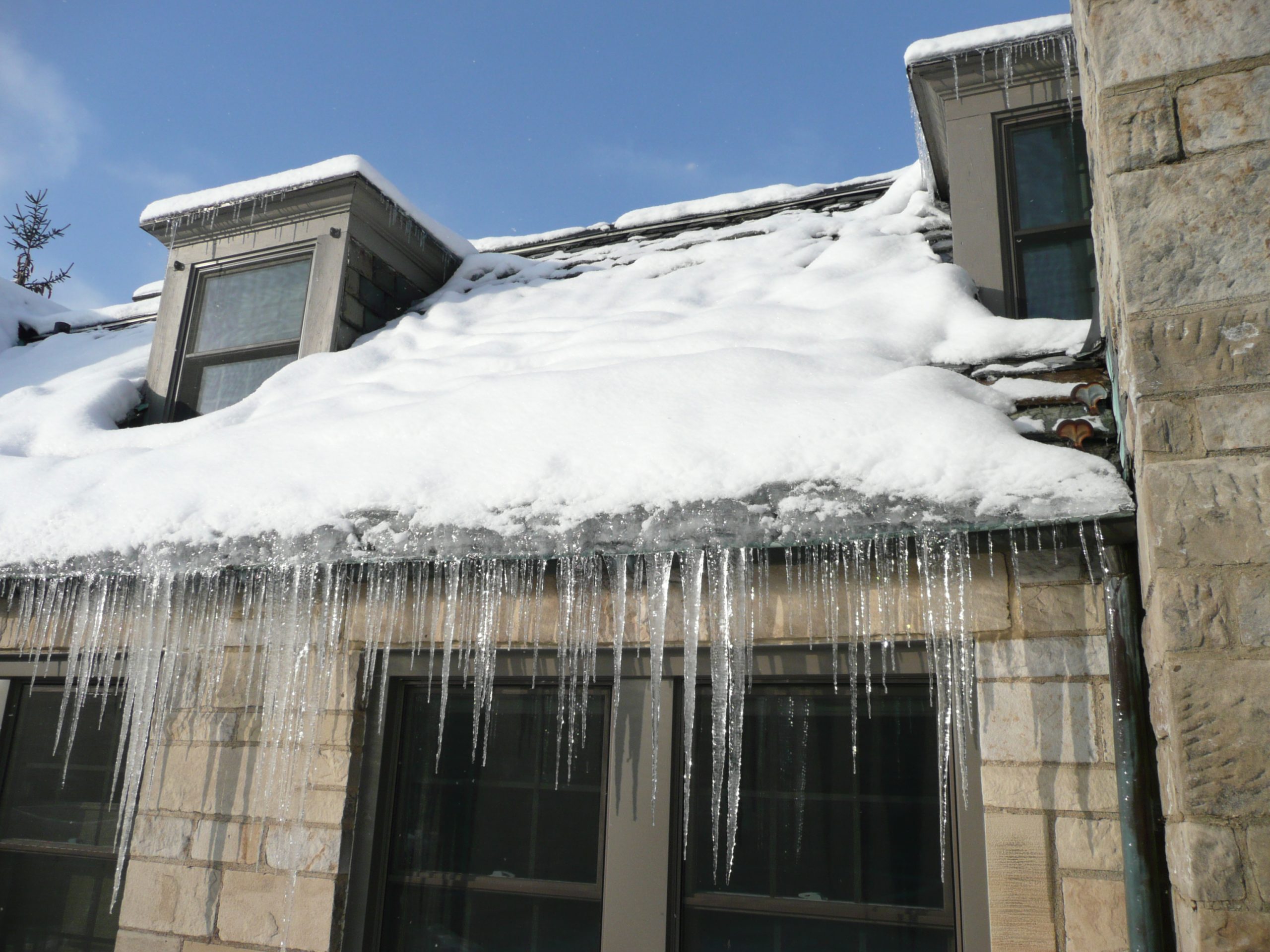
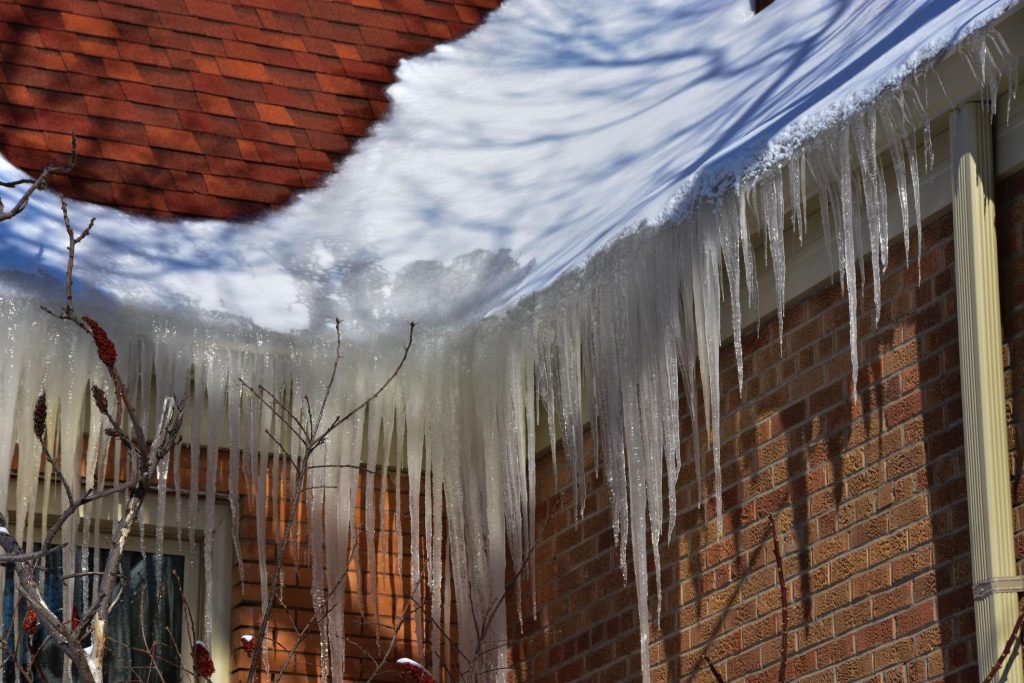
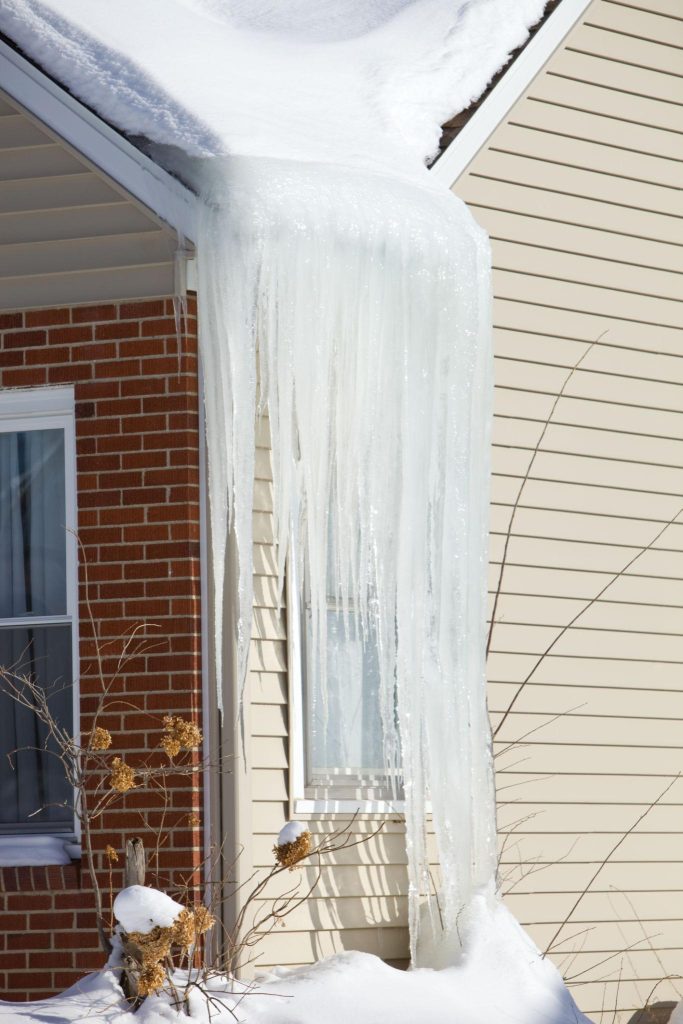
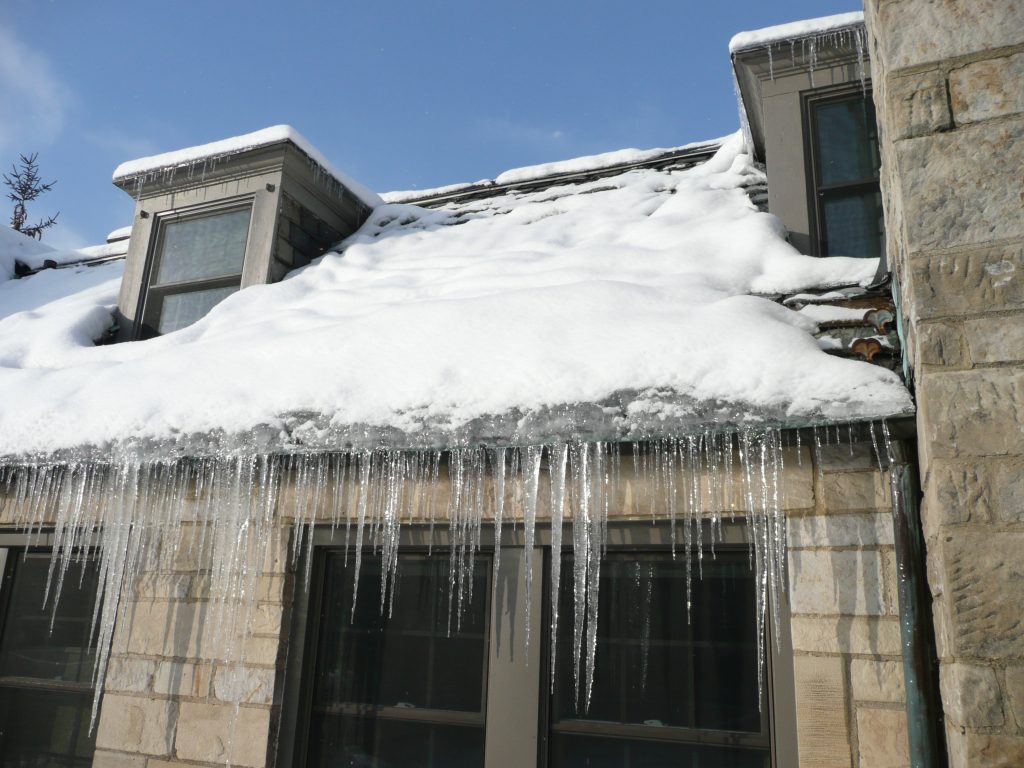
Winter in Virginia can be unpredictable. One week it’s mild, the next we’re dealing with snow, ice, and repeated freeze–thaw cycles. One of the most common things homeowners notice during these stretches is ice building up along gutters and roof edges.
If you see ice on your gutters, that alone is not unusual. In colder climates, including Minnesota where our team has firsthand experience, this is a normal winter condition. The problem starts when ice buildup turns into ice dams.
What Is an Ice Dam?
An ice dam forms when snow on the upper portion of a roof melts, flows downward, and then refreezes at the colder eaves and gutters. Over time, this creates a ridge of ice that blocks proper drainage.
Once that barrier forms, melting snow has nowhere to go. Water can back up under shingles and flashing, leading to leaks, damaged insulation, stained ceilings, and even structural issues.
This is not a cosmetic issue. Ice dams are a building-science problem.
Why Ice Dams Form
Ice dams are almost always a symptom of uneven roof temperatures. The most common contributors include:
- Heat escaping from the home into the attic
- Insufficient or poorly installed attic insulation
- Inadequate ventilation
- Blocked soffit vents
- Air leaks around lights, hatches, or ductwork
When warm air escapes, it heats the roof surface unevenly. Snow melts higher up, refreezes at the colder edges, and the cycle repeats.
What Helps Manage Ice Buildup
There are tools that can help reduce risk and improve safety during winter. These work best as management tools, not permanent fixes.
Roof Heat Cables
Installed in a zig-zag pattern along roof edges and gutters, heat cables create controlled melt paths so water can drain properly. They can be effective when paired with proper insulation and ventilation, but they are not a cure-all on their own.
Roof Rakes
Removing snow from the lower 3–6 feet of the roof reduces the amount of melting and refreezing that occurs. Roof rakes should always be used from the ground and never scraped aggressively against shingles.
Ice Melt Products
Ice melt and salt products are appropriate for concrete surfaces only such as driveways, sidewalks, and steps. They should never be used on roofs, gutters, or siding. These products can cause corrosion, material damage, and long-term issues when misused.
What These Methods Are Really For
These approaches help manage winter conditions and reduce immediate risk, but they do not correct the root cause. If ice dams appear year after year, the long-term solution almost always involves:
- Improving attic insulation
- Ensuring proper ventilation
- Sealing air leaks
- Addressing roof and gutter design issues
Fixing the underlying problem prevents damage rather than reacting to it after water has already found its way inside.
Experience Matters
Four-season climates expose weaknesses quickly. Homes that perform well in harsh winters are built and maintained with proper airflow, insulation, and attention to detail. Those same principles apply anywhere winter weather exists, including here in Virginia.
At Energy Windows, we focus on prevention. Our goal is to help homeowners stay ahead of winter damage, protect their investment, and avoid costly repairs before small problems turn into big ones.
If you’re seeing recurring ice buildup or signs of interior leaks, it’s worth taking a closer look now—before the next freeze does it for you.

